
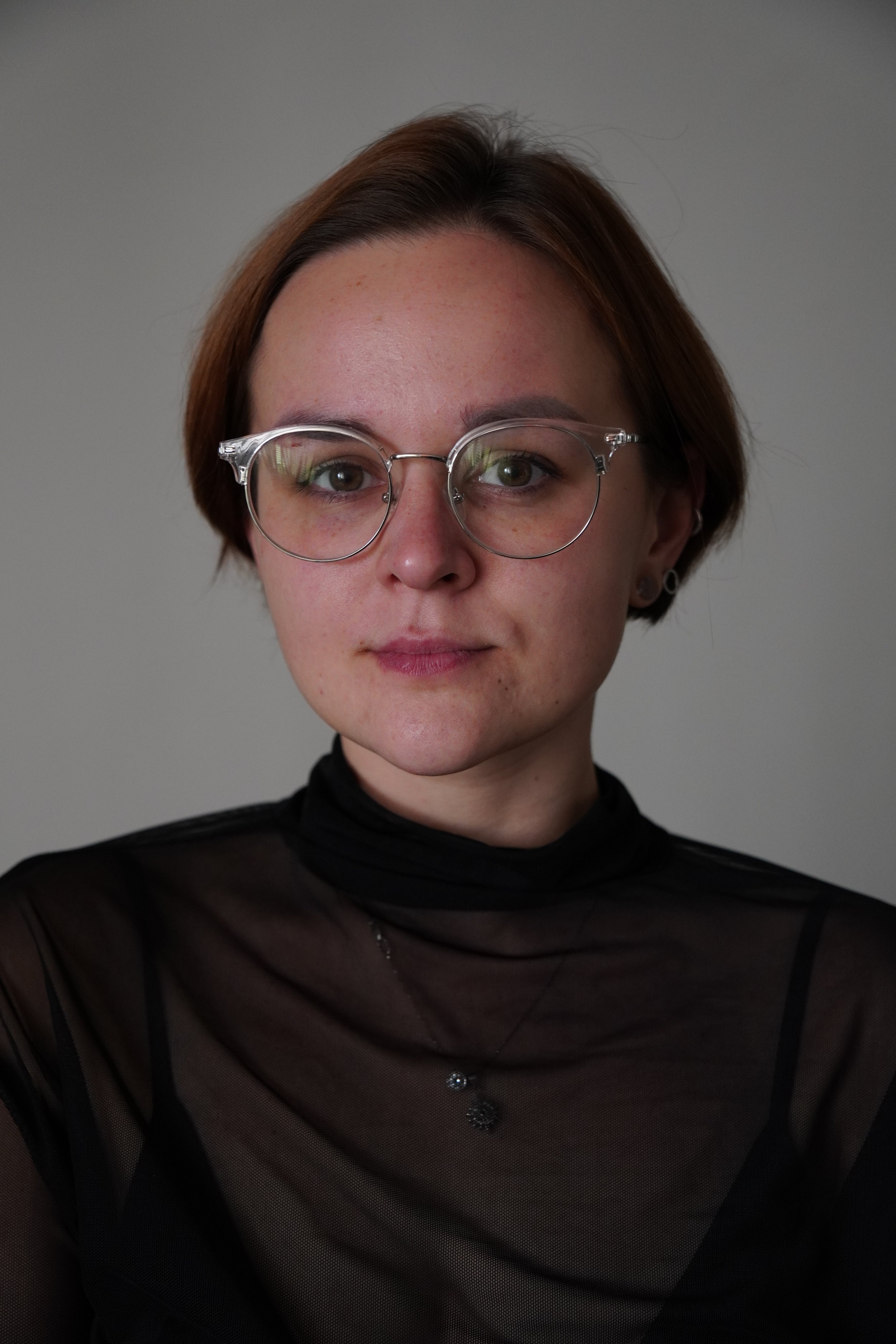
Aleksandra Kaner
Ph.D. student
School of Health Professions
Effects of increasing variability in motor learning: Developing models and concepts for motor rehabilitation
Project description
Movement variability is the inability to perform two identical movements, even if the performance is successful. It has long been viewed that variability is “a noise” that impairs performance and should be reduced to achieve more accurate movements. However, emerging evidence suggests that variability may facilitate exploration, adaptability, and motor learning outcomes.
Despite numerous studies, the role of variability remains inconsistent. The relationship between initial movement variability and motor learning outcomes is correlational, and we still do not have an answer whether it is higher variability that causes increased learning, or something else. My project aims to uncover how experimentally increased variability drives motor learning outcomes and can be leveraged to develop individualized training and rehabilitation strategies.
To test the contribution of variability, I am testing whether introducing variability along single or multiple task-relevant dimensions enhances motor learning in healthy young adults and explores interactions with heart rate variability as a marker of adaptability. The next step is to develop personalized training schedules by tailoring variability levels using staircase algorithms based on individual baseline variability, and to test whether externally induced variability can improve motor learning in stroke survivors and older people, for whom variability is typically elevated and structurally altered.
This research bridges motor neuroscience, learning theory, and rehabilitation science, producing evidence that can inform broader models of human learning and adaptive behavior.
About me
I am currently a PhD student in the Department of Physical Therapy, working under the supervision of Prof. Jason Friedman. I received my MD from Saratov State Medical University (Russia) in 2021 and completed a residency in internal medicine in 2023. My research aims to provide insights into learning processes and offers a unified framework for understanding and optimizing motor learning across populations with distinct variability profiles.